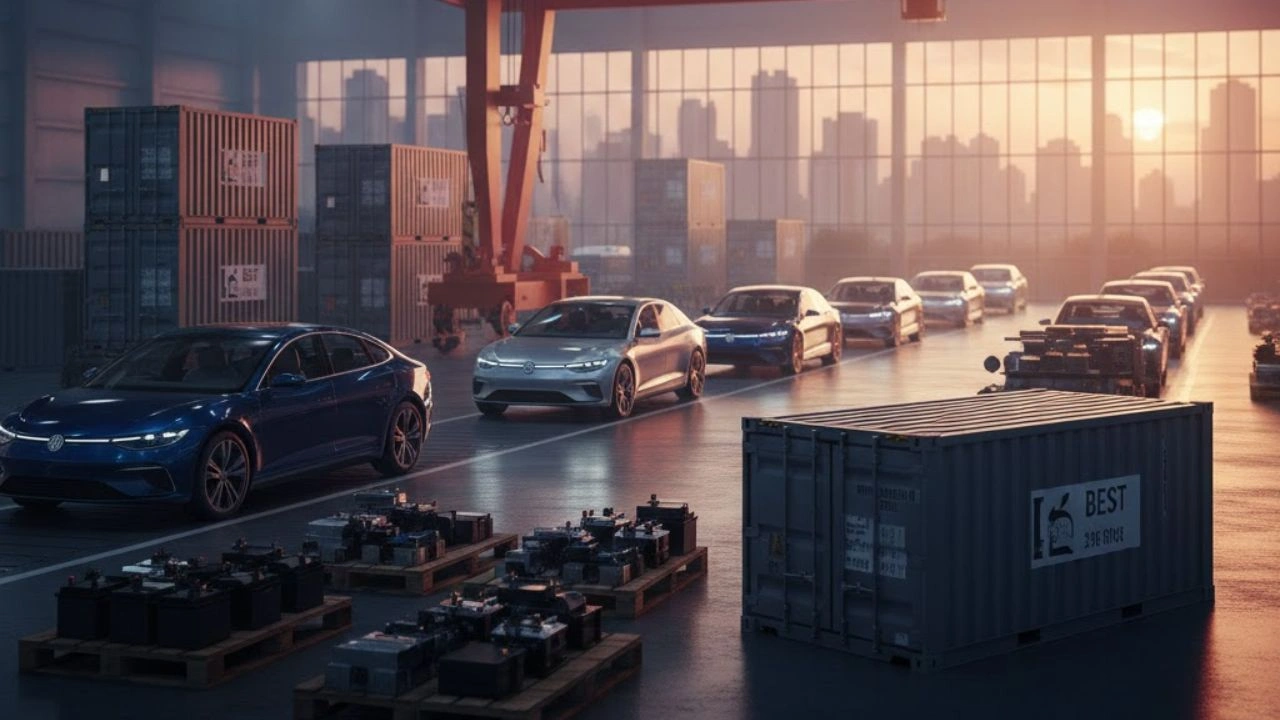
A new phase of India–US economic cooperation is reshaping opportunities for automotive manufacturers, suppliers, and global supply chains.
The evolving trade relationship between India and the United States is drawing strong attention from the automotive industry. A recently discussed bilateral trade framework—focused on tariff rationalisation, improved market access, and smoother regulatory cooperation—has the potential to significantly influence India’s auto exports, component manufacturing ecosystem, and long-term global competitiveness.
While the agreement is broader than a single sector, automobiles and auto components are among the biggest potential beneficiaries, given their strong export base and deep integration with international supply chains. This article explains the key implications, opportunities, risks, and long-term outlook for India’s automotive ecosystem in clear, practical terms.
Why the India–US Trade Relationship Matters for Autos
The United States remains one of the largest automotive and engineering import markets in the world. For Indian manufacturers—especially component suppliers—access to the U.S. market is crucial for:
- Export revenue growth
- Technology partnerships
- Supply-chain diversification
- Brand credibility in developed markets
Even small tariff reductions or regulatory simplifications can create large competitive advantages, because global buyers compare sourcing costs across multiple countries.
For India, deeper trade alignment with the U.S. also supports a broader strategic goal:
positioning itself as a trusted manufacturing alternative in global supply chains.
Tariff Changes and Cost Competitiveness
One of the most discussed aspects of the trade framework is the reduction of reciprocal tariffs and duties on selected categories of goods, including automotive components.
Lower tariffs matter because they:
- Reduce the landed price of Indian exports in the U.S.
- Improve profit margins for exporters
- Make Indian suppliers more competitive than rivals in higher-duty regions
- Encourage long-term sourcing contracts from global OEMs
For component makers operating on tight margins and high volumes, even a modest duty reduction can translate into millions of dollars in additional annual business.
Read Also: Ashok Leyland Shares Hit New 52-Week High of ₹205.2 – Stock Rally Explained
Strong Upside for Auto Component Manufacturers
Among all automotive stakeholders, component manufacturers stand to gain the most immediately from improved trade access.
India already exports a wide range of parts, including:
- Engine and transmission components
- Forgings and castings
- Electrical and electronic systems
- EV-related subsystems and wiring
- Precision engineering products
With tariff relief and smoother regulatory pathways, Indian suppliers could:
- Expand export volumes
- Win long-term supply contracts
- Move up the value chain into advanced components
- Increase investment in automation and quality certification
This shift is particularly important as global companies adopt “China-plus-one” sourcing strategies, seeking diversified and reliable manufacturing partners.
India’s combination of cost efficiency, engineering talent, and policy support places it in a strong position to capture this opportunity.
What the Deal Means for Auto OEMs
For vehicle manufacturers (OEMs), the impact is more gradual but strategically important.
Limited Short-Term Impact on Finished Vehicle Exports
Exporting fully built passenger vehicles to the U.S. remains challenging due to:
- Strict safety and emission regulations
- Complex homologation requirements
- Strong domestic competition in the U.S. market
Therefore, immediate large-scale vehicle exports are unlikely in the near term.
Long-Term Strategic Opportunities
However, the trade environment could still benefit OEMs through:
- Export of niche or specialty vehicles
- Shipment of CKD/SKD kits for overseas assembly
- Collaboration in electric mobility and software-defined vehicles
- Joint R&D in battery tech, safety systems, and connectivity
Over time, these pathways may open doors for deeper U.S. market participation.
Boost to Electric Vehicle Supply Chains
Another major implication lies in the electric vehicle (EV) ecosystem.
As the U.S. accelerates EV adoption, demand is rising for:
- Battery components
- Power electronics
- Lightweight materials
- Charging hardware
- Software integration systems
India’s growing EV manufacturing base could become an important export hub for these technologies—especially if trade barriers continue to ease.
This would align with India’s broader ambition to become a global clean-mobility manufacturing center.
Investment Confidence and Industrial Growth
Trade predictability plays a crucial role in long-term industrial investment.
When tariffs and regulations stabilise:
- Manufacturers invest more in capacity expansion
- Global companies form deeper supplier partnerships
- Technology transfer becomes more feasible
- Employment generation increases
For India’s auto sector—already one of the country’s largest employers—this could mean:
- New factories and tooling investments
- Higher-value engineering roles
- Expansion of export-oriented clusters
- Stronger MSME participation in global supply chains
In short, the trade deal can act as a multiplier for industrial growth, not just export revenue.
Challenges That Still Remain
Despite strong optimism, several structural hurdles continue to shape the outlook.
Non-Tariff Barriers
Even with lower duties, exporters must still navigate:
- Certification requirements
- Quality audits
- Environmental compliance
- Logistics costs
These factors can sometimes offset tariff advantages.
Regulatory Complexity for Vehicles
Passenger vehicle exports to developed markets require:
- Expensive testing and redesign
- Compliance with strict crash and emission norms
- Brand-building investments
This keeps OEM expansion slow and capital-intensive.
Global Economic Uncertainty
Trade benefits depend on:
- Stable geopolitical relations
- Consistent policy implementation
- Healthy global demand
Any disruption could delay expected gains.
Strategic Significance for India’s Economy
Beyond the auto sector, stronger India–US trade ties signal:
- Growing geopolitical alignment
- Expansion of high-value manufacturing
- Increased foreign investment interest
- Integration into advanced technology ecosystems
For India, this supports a long-term transformation from a domestic-focused market to a global manufacturing powerhouse.
The automotive industry—due to its scale and complexity—often acts as a leading indicator of industrial progress.
Positive movement here typically reflects broader economic momentum.
Read Also: India EV Market Surges 51% in January 2026 as Tata Motors Dominates
Future Outlook: A Gradual but Powerful Shift
The real impact of the trade deal will unfold over several years, not months.
Short Term
- Improved sentiment in export-oriented companies
- Margin relief for component makers
- Early supply-chain diversification
Medium Term
- Capacity expansion and technology upgrades
- Growth in EV component exports
- Stronger India presence in U.S. sourcing networks
Long Term
- Potential niche vehicle exports
- Deep R&D collaboration
- India emerging as a global automotive engineering hub
This gradual progression is typical of major trade realignments.
Conclusion
The developing India–US trade framework represents a meaningful opportunity for the automotive sector, particularly for component manufacturers seeking global scale and stability.
While finished vehicle exports may take longer to materialise, the broader effects—stronger supply chains, higher investment, EV ecosystem growth, and improved competitiveness—could reshape India’s position in the global auto industry.
Ultimately, the agreement is less about immediate headlines and more about long-term structural transformation.
If policy momentum continues and industry responds strategically, India could move closer to becoming one of the world’s most important automotive manufacturing and export centers in the coming decade.
1 thought on “India–US Trade Deal 2026: Big Opportunity for Auto OEMs and Component Makers”