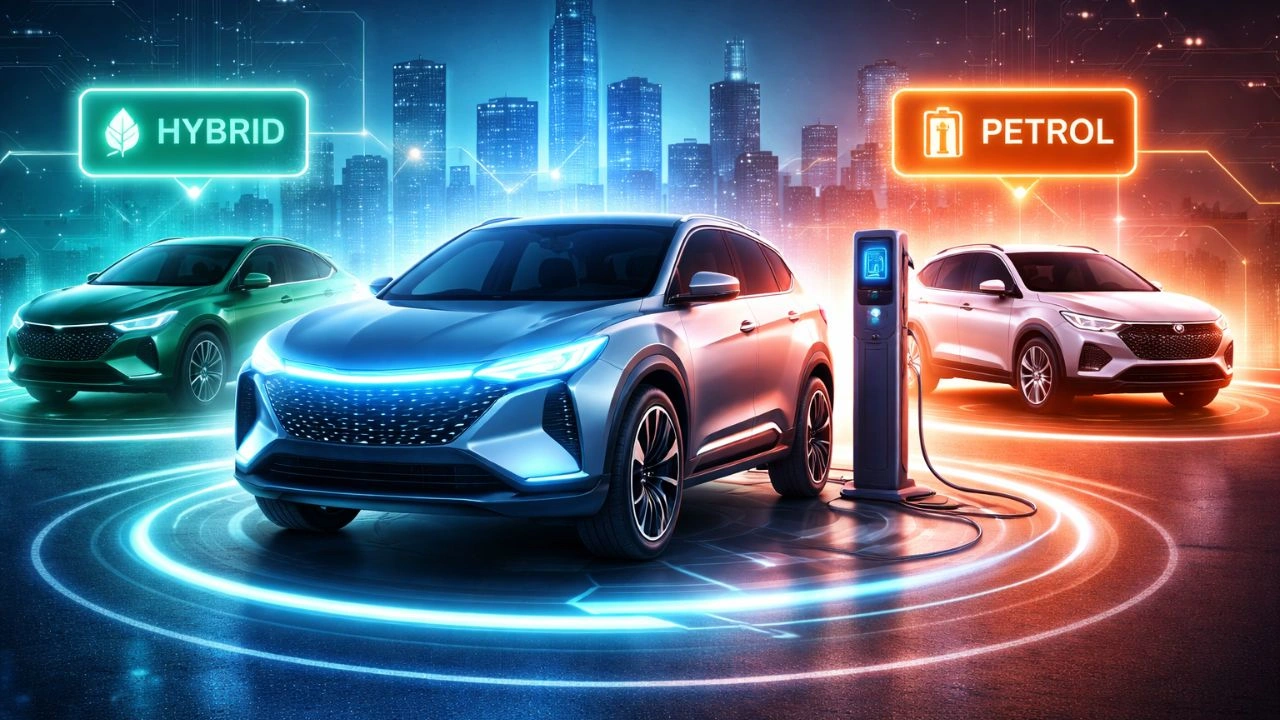
The global automotive industry is undergoing one of the most dramatic transitions in its history. Governments are tightening emissions rules, technology is advancing rapidly, and consumers are gradually shifting toward cleaner mobility solutions. Electric vehicles (EVs) have long been viewed as the inevitable future of transportation. However, recent developments show that the road to full electrification may be more complex than many automakers initially believed.
One of the clearest signs of this reality comes from Stellantis, one of the world’s largest automotive groups. The company has openly acknowledged that it overestimated how quickly consumers would adopt electric vehicles, leading to a major strategic reset and billions in financial write-offs. This moment is not just significant for Stellantis—it reflects broader uncertainty across the entire automotive sector.
This article explores what happened, why it matters, and how it could reshape the future of cars worldwide.
The Scale and Influence of Stellantis
Stellantis is not a small or niche manufacturer. Formed through the merger of Fiat Chrysler Automobiles and the PSA Group, it controls a wide portfolio of globally recognised brands. These include Peugeot, Citroën, Fiat, Jeep, Ram, Dodge, Chrysler, Alfa Romeo, and Vauxhall, among others.
Because of this scale, any strategic shift inside Stellantis sends ripples across the global auto industry. The company sells millions of vehicles annually across Europe, North America, and emerging markets. Its decisions influence suppliers, charging infrastructure investment, employment, and even government policy expectations.
So when Stellantis admits it misread EV demand, the implications extend far beyond one company’s balance sheet.
What Went Wrong With EV Expectations?
For years, the dominant narrative suggested EV adoption would accelerate rapidly. Several factors supported this belief:
- Strong government incentives and subsidies
- Rising environmental awareness
- Falling battery costs
- Increasing fuel prices in many regions
Automakers—including Stellantis—responded by committing tens of billions of euros toward electrification. Factories were redesigned, combustion-engine programs were scaled back, and ambitious EV launch timelines were announced.
However, the real-world transition has proven uneven.
Slower-Than-Expected Consumer Adoption
While EV sales continue to grow globally, the pace is not uniform. In some regions, demand has cooled due to:
- High upfront purchase prices
- Limited charging infrastructure in certain areas
- Range anxiety among first-time buyers
- Reduced or changing government incentives
Many consumers still prefer hybrids or efficient petrol vehicles as a practical middle ground.
Stellantis ultimately recognised that its earlier EV-heavy strategy moved faster than customer readiness.
The Financial Impact: Billions in Write-Offs
Strategic miscalculations in the automotive sector are expensive. Developing new platforms, battery supply chains, and production lines requires enormous investment.
Stellantis now faces multi-billion-euro write-offs tied to:
- Cancelled or delayed EV programs
- Underused production capacity
- Investments that may not deliver expected returns
These losses highlight a crucial truth:
The transition to electric mobility is not only technological—it is economic and behavioural.
Even when EV technology is ready, market readiness must follow.
A Strategic Reset: From “EV-First” to “Customer-First”
Rather than abandoning electrification, Stellantis is rebalancing its approach.
Key Elements of the New Direction
- Greater focus on hybrids and efficient combustion engines
These options appeal to customers who want lower emissions without full EV commitment. - Flexible powertrain strategy
Future models may support multiple propulsion systems depending on regional demand. - Closer alignment with real consumer behaviour
Instead of forcing rapid EV adoption, the company aims to follow market readiness.
This shift reflects a broader industry realisation:
The future is electric—but the timeline is uncertain.
Read Also: Electric Vehicle Subsidies in India: A Complete Guide 2026
What This Means for the Global EV Market
Stellantis is not alone in adjusting expectations. Across the automotive world:
- Some manufacturers are delaying EV-only targets
- Hybrid investment is increasing again
- Governments are reconsidering aggressive deadlines
None of this signals the end of EVs. Instead, it suggests a more gradual and balanced transition.
EV Growth Will Continue—But Differently
Key long-term drivers remain strong:
- Climate regulations
- Battery innovation
- Falling long-term ownership costs
- Urban emission restrictions
However, the journey will likely include hybrids, plug-in hybrids, and cleaner combustion engines as transitional technologies.
Consumer Perspective: Choice Matters Most
From a buyer’s standpoint, Stellantis’ new strategy could actually be positive.
Instead of a forced shift to EVs, customers may see:
- More affordable hybrid options
- Improved fuel efficiency in petrol models
- Gradual EV improvements in range and charging speed
- Better alignment between price and practicality
In short, flexibility benefits consumers.
Industry Lesson: Technology Alone Isn’t Enough
One of the biggest insights from this development is that innovation must match real-world behaviour.
History shows similar patterns:
- Early smartphones struggled before mass adoption
- Streaming services took years to replace physical media
- Renewable energy required policy and infrastructure support
Electric vehicles are following the same path—inevable, but gradual.
The Road Ahead for Stellantis
Despite current setbacks, Stellantis still holds strong long-term potential:
- Global manufacturing scale
- Diverse brand portfolio
- Ongoing EV research and battery development
- Growing hybrid expertise
If managed carefully, the present reset could become a strategic advantage rather than a failure.
Companies that adapt realistically often outperform those that follow rigid predictions.
The Bigger Picture: A Transitional Decade
The 2020s may ultimately be remembered not as the decade EVs took over—but as the decade the foundation was built.
We are likely entering a mixed-mobility era featuring:
- Fully electric urban vehicles
- Hybrid family cars
- Efficient combustion engines in developing markets
- Rapid charging infrastructure expansion
By the 2030s, conditions may finally support widespread EV dominance.
Read Also: Tata Harrier EV Sales Near 25,000 by March 2026 – India’s Premium Electric SUV Boom
Conclusion
Stellantis’ decision to rethink its EV strategy marks a pivotal moment in the evolution of the automotive industry. The company’s admission that it overestimated EV demand underscores the complexity of transforming global transportation.
Rather than signalling failure, this shift reflects maturity and realism. Electrification remains the long-term destination, but the path forward will include hybrids, improved combustion technology, and a pace guided by consumers—not assumptions.
For drivers, this means more choice.
For the industry, it means smarter planning.
And for the future of mobility, it means progress—just not overnight.
The electric revolution is still coming.
It’s simply taking a more practical road to get there.