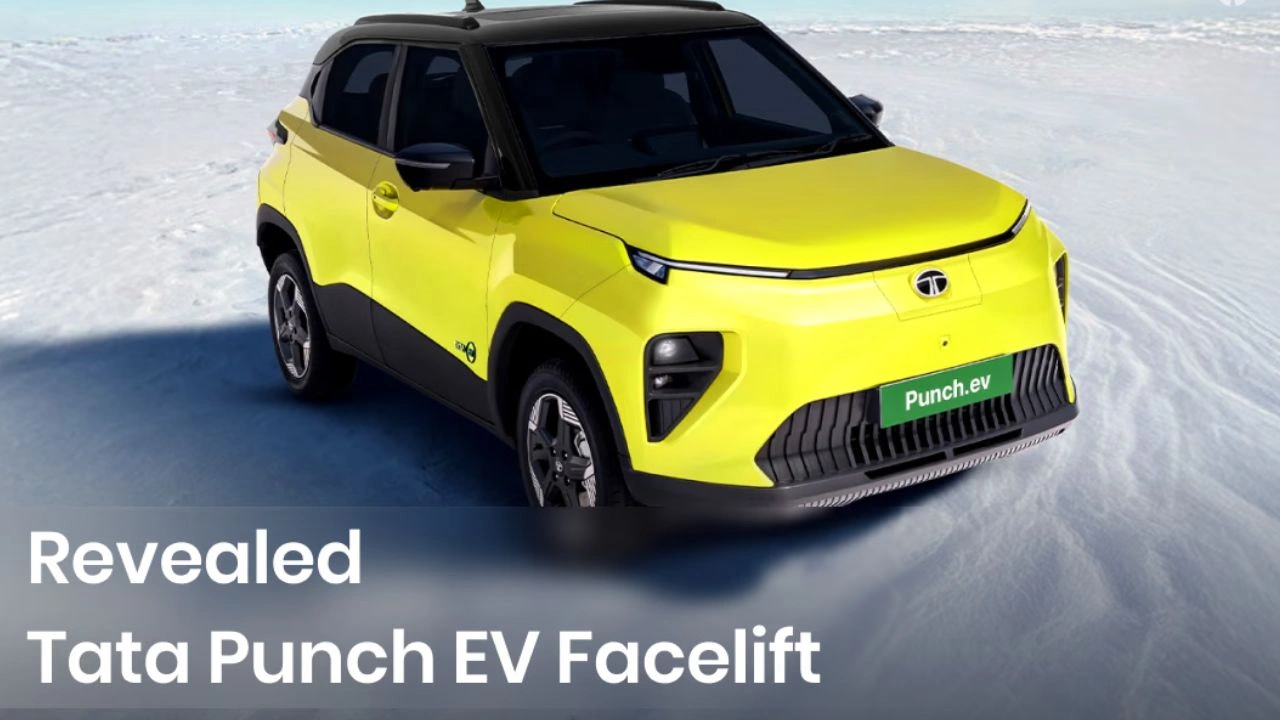
Tata Punch EV: The Indian automobile sector continues to evolve at a remarkable pace, driven by electrification, premiumisation, regulatory reform, and stronger domestic manufacturing. The past week has been especially significant, with multiple announcements that signal where the industry is heading over the next few years.
From the refreshed electric micro-SUV segment to the unveiling of a new flagship off-road SUV, from global emission testing adoption to expanded EV service ecosystems, the developments collectively paint a clear picture:
India’s mobility future is becoming cleaner, smarter, and more globally aligned.
This in-depth, fully rewritten feature explores each major update in detail, explains why it matters to buyers and manufacturers, and examines how these changes will shape the next phase of India’s automotive journey.
Tata Punch EV Facelift: Strengthening India’s Entry-Level Electric SUV Segment
Tata Motors has taken another step in reinforcing its leadership in India’s electric vehicle space by revealing an updated version of the Punch EV. Positioned in the fast-growing micro-SUV category, the Punch EV has already gained attention for making electric mobility accessible to a wider audience.
What’s new in the facelift?
While the overall silhouette remains familiar, the refreshed model is expected to introduce:
- Sharper exterior styling elements
- Updated cabin materials and infotainment features
- Potential efficiency or range improvements
- Additional convenience and safety technology
These refinements are crucial because the entry-level EV segment is becoming increasingly competitive. Buyers today expect not only affordability but also modern design, usable driving range, and connected-car technology.
Why this update matters
India’s EV transition depends heavily on mass-market adoption, not just premium electric cars. Vehicles like the Punch EV play a pivotal role by:
- Lowering the cost barrier to EV ownership
- Encouraging first-time electric buyers
- Expanding charging ecosystem demand
- Supporting urban zero-emission mobility
In many ways, the success of such compact EVs will determine how quickly India can scale electric mobility nationwide.
Tata’s New Tamil Nadu Manufacturing Hub: A Major Boost to Local Production
Another landmark development is the start of production at Tata’s new automotive facility in Tamil Nadu. Large-scale manufacturing investments of this nature are never just about one factory—they signal long-term strategic intent.
Key significance of the new plant
The facility is expected to:
- Produce vehicles for both Tata Motors and Jaguar Land Rover
- Support future electric vehicle manufacturing
- Strengthen domestic supply chains
- Generate employment and regional economic growth
Launching production with a locally assembled premium SUV demonstrates India’s growing capability to handle high-value automotive manufacturing, not just budget vehicles.
Broader industry impact
Local production expansion contributes to:
- Reduced import dependency
- Lower manufacturing costs
- Faster rollout of new models
- Increased export potential
For India’s ambition to become a global automotive hub, such investments are foundational.
WLTP Testing Adoption: India Moves Toward Real-World Efficiency Standards
Regulation often shapes the future of mobility more than individual car launches. One of the most important announcements this week is India’s plan to adopt the Worldwide Harmonised Light Vehicle Test Procedure (WLTP) in the coming years.
What is WLTP and why does it matter?
WLTP is a globally recognised testing method designed to provide:
- More realistic fuel-efficiency figures
- Accurate emission measurements
- Better comparison between vehicles
- Driving conditions closer to real-world usage
Compared to older testing cycles, WLTP reduces the gap between claimed mileage and real-life performance.
Benefits for Indian consumers
For buyers, this shift means:
- Greater transparency in vehicle efficiency
- Improved environmental accountability
- Easier comparison with global models
Ultimately, WLTP adoption aligns India with international automotive standards, an essential step for exports and sustainability goals.
Mahindra’s Expanding EV Service Network: Convenience Becomes a Priority
As electric vehicles grow in popularity, after-sales support becomes just as important as the vehicles themselves. Mahindra’s latest move to strengthen its service presence—especially through mobile service solutions—highlights a key industry trend.
The rise of mobile EV servicing
New service initiatives aim to deliver:
- On-site maintenance at customer locations
- Faster minor repairs and diagnostics
- Reduced dependency on workshop visits
- Improved ownership convenience
This approach is particularly valuable in dense urban regions, where time and accessibility strongly influence customer satisfaction.
Why service ecosystems matter for EV adoption
Many potential EV buyers hesitate due to concerns about:
- Maintenance availability
- Technical expertise
- Battery servicing
- Long-term reliability
By expanding service infrastructure, automakers directly address these concerns—removing one of the biggest psychological barriers to EV ownership.
Skoda Slavia Facelift Spotted: Keeping the Sedan Segment Relevant
Despite the surge in SUV popularity, the mid-size sedan segment in India remains important. The sighting of an updated Skoda Slavia undergoing testing suggests manufacturers are not abandoning sedans—they are evolving them.
Expected changes in the facelift
Though details remain limited, typical mid-cycle updates may include:
- Revised exterior styling
- Feature additions inside the cabin
- Updated infotainment or connectivity
- Minor mechanical refinements
Such updates help maintain market relevance without a full redesign.
Why sedans still matter
Sedans continue to offer advantages that SUVs sometimes cannot:
- Better fuel efficiency
- Superior ride comfort
- Lower center of gravity for handling
- More affordable pricing in some segments
For many buyers, especially highway commuters, sedans remain a practical and refined choice.
MG Majestor SUV: A New Premium Contender Enters the Scene
One of the most exciting reveals of the week is the introduction of the MG Majestor, a large and premium SUV positioned above existing offerings in the brand’s lineup.
What sets the Majestor apart?
Early information suggests the SUV focuses on:
- Bold, muscular exterior styling
- Spacious, feature-rich interior
- Advanced off-road capability
- High-end comfort and technology
Positioning above current models indicates MG’s intention to move further into the premium SUV space.
Growing demand for large SUVs in India
The popularity of full-size SUVs reflects changing consumer preferences:
- Families seeking more cabin space
- Buyers upgrading from mid-size SUVs
- Rising interest in adventure and off-road travel
- Increasing acceptance of premium pricing
This shift shows India is no longer just a small-car market—it is rapidly diversifying.
Key Industry Trends Emerging From This Week’s News
Looking beyond individual announcements, several powerful themes become clear.
1. Electrification Is Expanding Across Price Segments
From compact EVs to premium electric readiness in factories, electrification is moving toward mass adoption.
2. Domestic Manufacturing Is Strengthening
New plants and localisation efforts signal India’s ambition to become a global production powerhouse.
3. Regulation Is Becoming Globally Aligned
WLTP adoption shows commitment to environmental responsibility and export competitiveness.
4. Customer Experience Is a Competitive Battleground
Mobile servicing and connected features reveal a shift from selling cars to delivering ownership ecosystems.
5. Premiumisation Continues Across Segments
Large SUVs and feature-rich cabins highlight rising consumer expectations and purchasing power.
What This Means for Car Buyers in India
For everyday consumers, these developments translate into tangible benefits.
More choices across budgets
From affordable EVs to luxury SUVs, buyers now enjoy unprecedented variety.
Better transparency in performance
Global testing standards ensure honest efficiency and emission data.
Improved ownership convenience
Expanded service networks reduce maintenance anxiety.
Faster technology adoption
Connected features, safety systems, and electrification are reaching mainstream price points.
Read Also: Skoda Epiq Affordable Electric SUV 2026 – Price, Features, Launch Details
The Road Ahead: India’s Automotive Future
India’s auto industry is entering a transformative decade shaped by:
- Electric mobility expansion
- Smart manufacturing investments
- Sustainable regulation
- Digital-first ownership experiences
- Rising consumer sophistication
The announcements from this single week illustrate how quickly the landscape is evolving.
Conclusion: A Snapshot of a Rapidly Changing Mobility Ecosystem
This week’s automotive developments collectively reveal a powerful narrative:
India is not merely adapting to global mobility trends—it is actively shaping its own future.
- Entry-level EVs are becoming stronger and more appealing.
- Domestic manufacturing capacity is expanding at scale.
- Regulatory frameworks are aligning with global standards.
- Service ecosystems are improving customer confidence.
- Premium SUVs are redefining aspiration in the market.
Together, these signals confirm that the Indian automobile industry is moving toward a future that is:
Electric, efficient, globally competitive, and deeply customer-focused.
For buyers, manufacturers, and policymakers alike, the journey ahead promises to be one of the most exciting chapters in India’s mobility history.