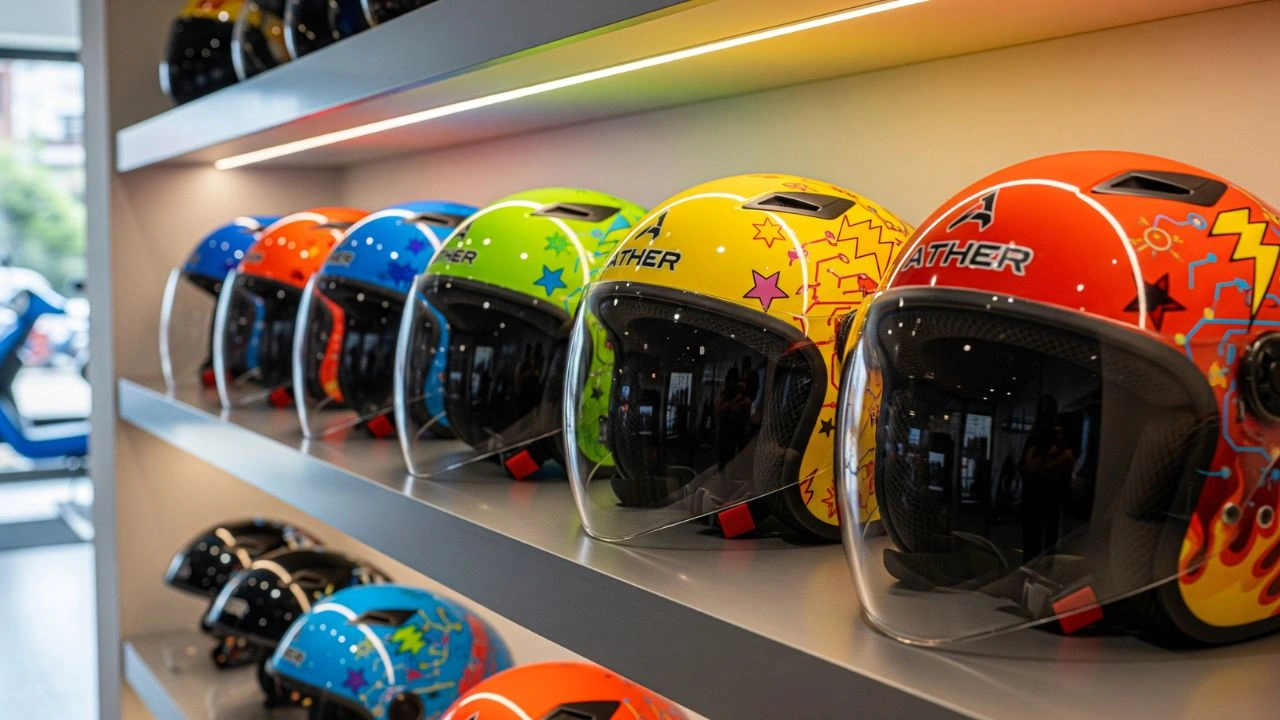
Ather Junior Helmets: A long-term safety initiative highlights the urgent need to protect young pillion riders and build lifelong helmet habits in India.
Road safety in India has long been a subject of concern, but one critical area often receives far less attention than it deserves: helmet safety for children riding as pillion passengers on two-wheelers. In a country where scooters and motorcycles are everyday family transport, millions of children travel on busy roads daily—many without any form of head protection.
Addressing this serious safety gap, Ather Energy, a leading electric two-wheeler manufacturer, has taken a meaningful and action-oriented step by handing over 100 Ather Junior helmets to the Bengaluru Traffic Police. This initiative, conducted as part of National Road Safety Month, focuses specifically on child road safety, a subject that requires urgent awareness, education, and community involvement.
Rather than limiting its role to vehicle manufacturing, Ather Energy has extended its safety commitment to society at large, reinforcing the idea that true mobility innovation must go hand in hand with responsibility.
Why Child Helmet Safety Deserves National Attention
India has one of the world’s highest two-wheeler populations. In cities like Bengaluru, two-wheelers are not just personal vehicles—they are family transport. Children often sit as pillion riders while parents commute to school, tuition, or daily errands.
Despite this reality, helmet usage among children remains dangerously low.
Key Reasons Child Helmet Use Is Neglected
- Short-distance travel creates a false sense of safety
- Parents struggle to find child-sized helmets
- Adult helmets are uncomfortable and unsafe for children
- Lack of consistent enforcement for child pillion riders
- Limited public awareness campaigns focused on children
According to road safety experts, children are physically and cognitively more vulnerable during accidents. Their skulls are still developing, neck muscles are weaker, and their ability to brace for impact is limited. Even a minor fall can result in severe head injuries.
Helmet protection for children is not optional—it is essential.
Read Also: Joy e-bike Beast: A Deep Dive Into India’s Premium Electric Motorcycle
The Role of Ather Energy in Promoting Road Safety
Ather Energy is widely recognised for its electric scooters and fast-charging ecosystem, but safety has always been a core pillar of the brand. From vehicle engineering to rider education, Ather has consistently emphasized responsible mobility.
By launching the Ather Junior helmet initiative, the company extends this philosophy beyond riders to include young passengers, a group that often remains invisible in road safety conversations.
This initiative demonstrates that:
- Road safety is a shared responsibility
- Companies can play an active role beyond compliance
- Children deserve equal protection on the road
Ather Junior Helmets: Built Specifically for Children
One of the biggest challenges parents face is finding helmets that are designed for children rather than adapted from adult models. Ather Junior helmets aim to address this exact problem.
What Makes Ather Junior Helmets Different?
- ISI-certified, ensuring compliance with Indian safety standards
- Proper sizing for children’s head structure
- Lightweight shell to reduce neck strain
- Comfortable padding suitable for longer rides
- Bright, engaging colours that encourage kids to wear them
Unlike oversized adult helmets that compromise safety, Ather Junior helmets provide proper fit and effective protection, significantly reducing the risk of head injury.
Why Proper Helmet Fit Is Critical for Children
A poorly fitting helmet can be as dangerous as not wearing one at all. Adult helmets used by children often:
- Shift during impact
- Fail to protect critical areas
- Cause discomfort leading to non-use
Child-specific helmets, on the other hand:
- Stay securely in place
- Absorb impact correctly
- Encourage consistent usage
By focusing on correct design rather than just compliance, Ather ensures that safety translates into real-world protection.
Bengaluru Traffic Police: Partnering for Impact
The Bengaluru Traffic Police (BTP) has been increasingly proactive in promoting road safety through education, awareness, and community engagement. The partnership with Ather Energy strengthens these efforts.
How the Helmets Will Be Used
The 100 Ather Junior helmets will be distributed through:
- Road safety awareness drives
- School outreach programmes
- Community traffic education campaigns
- On-ground interactions with families
Instead of relying solely on penalties, Bengaluru Traffic Police aim to educate and encourage parents and children to adopt helmet usage as a habit.
National Road Safety Month: Turning Awareness into Action
National Road Safety Month is observed across India to highlight traffic safety issues. However, awareness alone is not enough—action creates impact.
Ather Energy’s contribution stands out because it:
- Identifies a specific safety gap
- Offers a practical solution
- Supports law enforcement agencies
- Encourages long-term behavioural change
Such initiatives help transform road safety campaigns from symbolic observances into meaningful interventions.
The Alarming Reality of Two-Wheeler Accidents in India
Two-wheelers account for a large share of road accident fatalities in India. Studies show that:
- Head injuries are the leading cause of death in two-wheeler accidents
- Helmet usage significantly reduces fatality risk
- Pillion riders, especially children, are often unprotected
According to global road safety data, wearing a helmet:
- Reduces the risk of death by more than six times
- Cuts the risk of brain injury by up to 74%
Yet, child helmet use remains sporadic.
Why Children Are at Higher Risk on Two-Wheelers
Children face unique challenges on the road:
- Limited physical strength
- Smaller body mass
- Lower reaction time
- Poor balance as pillion riders
In traffic-heavy cities, even low-speed accidents can have devastating consequences for young passengers. Helmets act as the first and most important line of defense.
Parents and Guardians: The Most Important Decision-Makers
While companies and traffic authorities play key roles, parents and guardians ultimately decide whether children wear helmets.
Common misconceptions include:
- “It’s a short ride”
- “The road is familiar”
- “The child doesn’t like wearing it”
Initiatives like the Ather Junior helmet programme help:
- Remove access barriers
- Normalize child helmet usage
- Reinforce safety messages through authority figures
When parents see helmets being actively promoted by both companies and police, compliance increases significantly.
Early Habit Formation: The Key to Long-Term Road Safety
Road safety experts agree that habits formed in childhood last a lifetime. When children grow up:
- Wearing helmets regularly
- Understanding why safety matters
- Seeing parents lead by example
they are far more likely to become responsible riders and drivers in the future.
Ather’s initiative contributes to building a safety-first mindset from an early age.
Electric Mobility and Safety: Two Sides of the Same Coin
As electric scooters become more common, road safety conversations must evolve alongside sustainability goals.
Electric two-wheelers:
- Are quieter than petrol vehicles
- Accelerate quickly
- Can surprise other road users
This makes protective gear even more important, especially for children. Ather Energy’s focus on safety reinforces the idea that green mobility must also be safe mobility.
Corporate Responsibility That Goes Beyond Branding
In today’s world, corporate social responsibility is measured by real impact, not promotional scale. Ather’s helmet donation may seem modest in numbers, but its strategic importance is significant.
It:
- Addresses a neglected safety issue
- Supports public institutions
- Encourages behaviour change
- Sets an example for other companies
Such targeted initiatives often inspire broader action across industries.
A Model That Can Be Replicated Nationwide
The success of this initiative highlights a model that can be adopted by:
- Other cities
- Educational institutions
- Corporate organizations
- NGOs and community groups
By collaborating with traffic authorities and focusing on specific safety gaps, similar programmes can be implemented across India, creating a nationwide ripple effect.
Public Awareness and Community Impact
Public safety initiatives gain strength when they are visible and discussed. Media coverage and community conversations around the Ather Junior helmet initiative:
- Spark awareness among families
- Encourage discussion about child safety
- Influence social norms
Even families who do not receive helmets directly may rethink their safety practices after seeing such initiatives highlighted publicly.
Read Also: Genesis GV60: The Luxury Electric Crossover That Could Redefine Premium EV Design
Long-Term Vision: Safer Roads for the Next Generation
India’s road safety challenges cannot be solved overnight. They require:
- Education
- Enforcement
- Infrastructure
- Cultural change
Initiatives like Ather’s focus on the next generation, ensuring that today’s children grow up with strong safety values.
This long-term vision is what separates meaningful safety programmes from short-term campaigns.
Conclusion: Small Actions, Big Responsibility
The handover of 100 Ather Junior helmets to the Bengaluru Traffic Police represents more than a donation—it reflects a mindset that prioritizes human life over convenience.
By addressing child safety, supporting authorities, and encouraging early habit formation, Ather Energy demonstrates how businesses can contribute positively to society beyond their core products.
In a country where millions of children travel on two-wheelers daily, protecting young heads is not just a responsibility—it is a necessity.
Road safety begins with awareness. Awareness begins early. And early protection saves lives.
2 thoughts on “Ather Energy Donates Ather Junior Helmets to Bengaluru Traffic Police to Promote Child Road Safety”