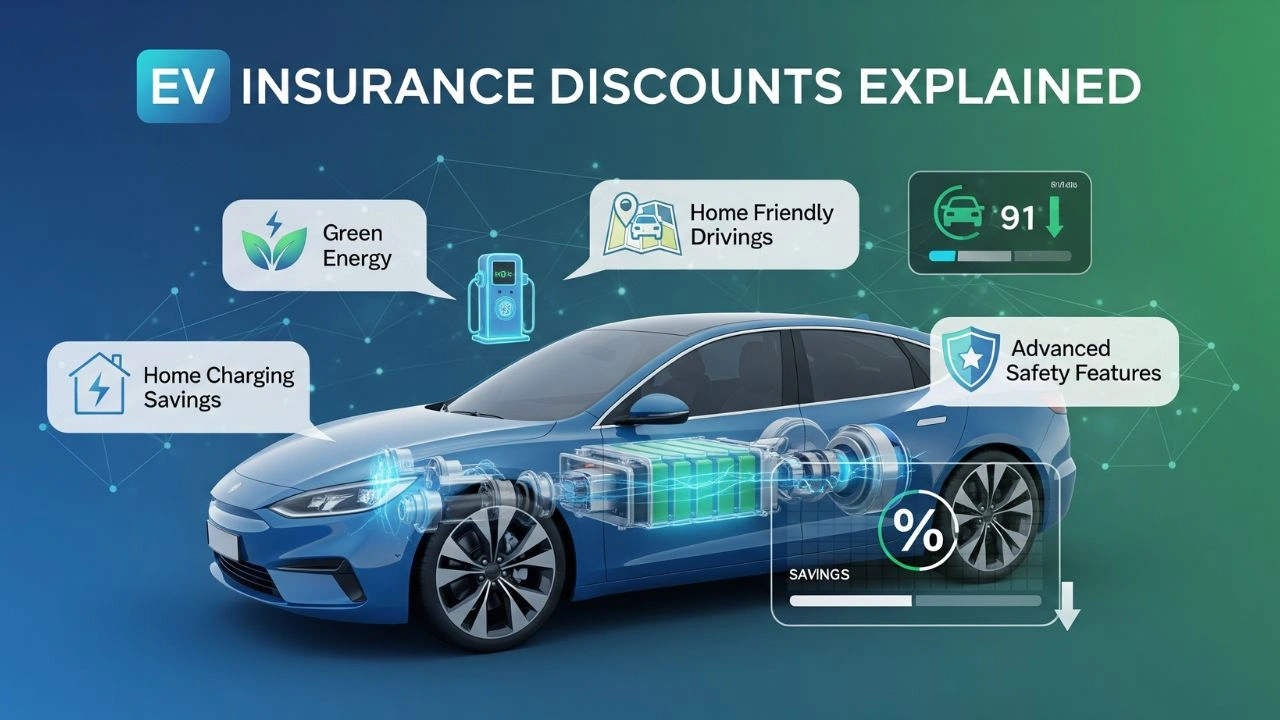
EV Insurance Discounts Explained: Electric vehicles are not only transforming how people drive—they are also reshaping how insurance premiums are calculated. Unlike traditional internal combustion engine (ICE) vehicles, EVs are data-rich machines capable of recording detailed information about driving behaviour, energy consumption, charging habits, and vehicle health. This constant flow of data has enabled insurers to move beyond fixed pricing models toward usage-based insurance (UBI) powered by telematics and smart driving analytics.
For EV owners, this shift presents a major opportunity: insurance discounts based on how, when, and how much they actually drive. However, it also introduces new questions about data usage, privacy, and premium volatility. This article explains how telematics-driven EV insurance discounts work, what kind of driving data insurers analyze, and how usage-based premiums are changing the insurance landscape.
What Makes EV Insurance Different From Traditional Car Insurance
Traditional car insurance relies heavily on static factors such as:
- Driver age and history
- Vehicle make and model
- Geographic location
EV insurance, by contrast, increasingly incorporates dynamic behavioral data. EVs generate far more operational information than ICE vehicles, including:
- Energy usage patterns
- Regenerative braking efficiency
- Charging frequency and locations
- Battery health indicators
This allows insurers to assess risk in real time rather than relying solely on historical averages.
Understanding Telematics in EV Insurance
Telematics refers to technology that collects and transmits vehicle data using onboard sensors, GPS, and cellular connectivity. In EVs, telematics systems are often built directly into the vehicle, eliminating the need for plug-in devices.
Telematics data typically includes:
- Speed and acceleration
- Braking behavior
- Cornering intensity
- Distance traveled
- Time of day driving occurs
For EVs, telematics can also capture battery-related metrics, offering insurers deeper insight into vehicle usage.
Read Also: Ultraviolette F77: India’s High-Performance Electric Motorcycle That Redefined Electric Riding
How Smart Driving Data Influences Insurance Discounts
Insurers use telematics data to create a personalized risk profile. Safe, consistent driving behaviors are rewarded with lower premiums, while risky behaviors can increase costs.
Key behaviors that often qualify for discounts include:
- Smooth acceleration and braking
- Consistent speed within limits
- Low annual mileage
- Minimal night-time driving
Because EVs encourage smoother driving through regenerative braking, many EV owners naturally score higher in telematics programs, making them ideal candidates for usage-based discounts.
Usage-Based Insurance (UBI): Pay for How You Drive
Usage-based insurance replaces flat-rate pricing with dynamic premiums that reflect actual vehicle use. For EV owners, UBI models are particularly attractive due to typically lower mileage and urban usage patterns.
Common UBI structures include:
- Pay-as-you-drive (based on distance)
- Pay-how-you-drive (based on behavior)
- Hybrid models combining both
These models can significantly reduce premiums for drivers who use their EVs responsibly and infrequently.
Mileage-Based Discounts: A Natural Fit for EV Owners
Many EVs are driven fewer miles than traditional vehicles, especially in urban environments. Lower mileage directly correlates with reduced accident exposure.
Telematics allows insurers to:
- Verify mileage accurately
- Adjust premiums in near real time
Drivers who primarily use EVs for commuting or short trips often benefit from substantial mileage-based insurance savings.
The Role of Regenerative Braking Data
Regenerative braking is a defining feature of EVs. It promotes smoother deceleration and reduces wear on braking systems.
Insurers view effective use of regenerative braking as:
- An indicator of anticipatory driving
- A sign of lower accident risk
Some telematics programs explicitly factor regenerative braking efficiency into discount calculations.
Time and Location-Based Risk Assessment
Telematics data also reveals when and where a vehicle is driven. Insurers analyze:
- Peak traffic hours
- High-risk zones
- Night-time driving frequency
EV drivers who avoid late-night or high-risk routes may qualify for additional discounts under usage-based models.
Charging Behavior and Its Indirect Insurance Impact
While charging habits don’t directly affect accident risk, they provide context about vehicle usage.
Insurers may consider:
- Regular home charging vs public charging
- Charging frequency relative to mileage
Consistent charging patterns can indicate predictable, lower-risk usage, indirectly supporting premium reductions.
How Insurers Translate Data Into Discounts
Each insurer uses proprietary scoring algorithms, but the general process involves:
- Collecting telematics data over a trial period
- Assigning risk scores to driving behaviors
- Adjusting premiums based on overall risk profile
Discounts can range from 5% to over 30%, depending on driving quality and mileage.
Upfront Discounts vs Ongoing Adjustments
Some EV insurance programs offer:
- Immediate enrollment discounts
- Additional savings after data review
Others adjust premiums monthly or quarterly. This dynamic pricing can be beneficial but also introduces variability.
Privacy Concerns and Data Ownership
One of the biggest concerns around telematics-based EV insurance is data privacy.
Key questions include:
- Who owns the driving data?
- How long is it stored?
- Can it be shared with third parties?
Reputable insurers provide transparent data policies, allowing drivers to opt out or limit data usage.
What Happens If Driving Behavior Worsens?
Usage-based insurance is a two-way system. While safe driving lowers premiums, risky behavior can increase them.
Potential triggers include:
- Frequent hard braking
- Excessive speeding
- Aggressive acceleration
Drivers should understand whether their insurer caps premium increases or only offers discounts without penalties.
Commercial EVs and Fleet Telematics Discounts
Telematics is especially powerful for commercial EV fleets. Fleet operators can:
- Monitor driver performance
- Reduce accidents
- Negotiate lower group premiums
Insurers often provide significant discounts for fleets that actively manage driving behavior using telematics.
EV Insurance Discounts vs Traditional No-Claim Bonuses
Usage-based discounts differ from no-claim bonuses because they:
- Reflect current behavior, not past claims
- Adjust continuously
- Reward proactive risk reduction
Many insurers allow both systems to coexist, offering layered savings.
Limitations of Telematics-Based Discounts
Telematics is not perfect. Limitations include:
- Data interpretation errors
- Penalization for unavoidable traffic conditions
- Driver discomfort with monitoring
EV owners should weigh potential savings against these drawbacks.
How to Maximize EV Insurance Discounts
To get the most from telematics-based insurance:
- Drive smoothly and predictively
- Limit unnecessary mileage
- Avoid high-risk driving times
- Review insurer data reports regularly
Small behavioral changes can lead to meaningful premium reductions.
Read Also: MG Comet EV: Redefining Urban Electric Mobility in India
The Future of EV Insurance Pricing
As EV adoption grows, telematics-driven pricing is expected to become the norm.
Future trends include:
- AI-driven risk scoring
- Battery health-based premium adjustments
- Integration with smart city traffic systems
Insurance will become more personalized, transparent, and responsive.
Conclusion: Data-Driven Driving Rewards the Responsible
Telematics and usage-based insurance represent a major shift in how EV insurance works. For responsible drivers, this shift offers real financial rewards, aligning premiums with actual risk rather than assumptions.
While data sharing requires trust and awareness, the benefits are clear. EV owners who understand and embrace smart driving data can significantly reduce insurance costs while contributing to safer roads.
In the evolving world of electric mobility, how you drive is becoming just as important as what you drive—and insurers are finally pricing policies to reflect that reality.