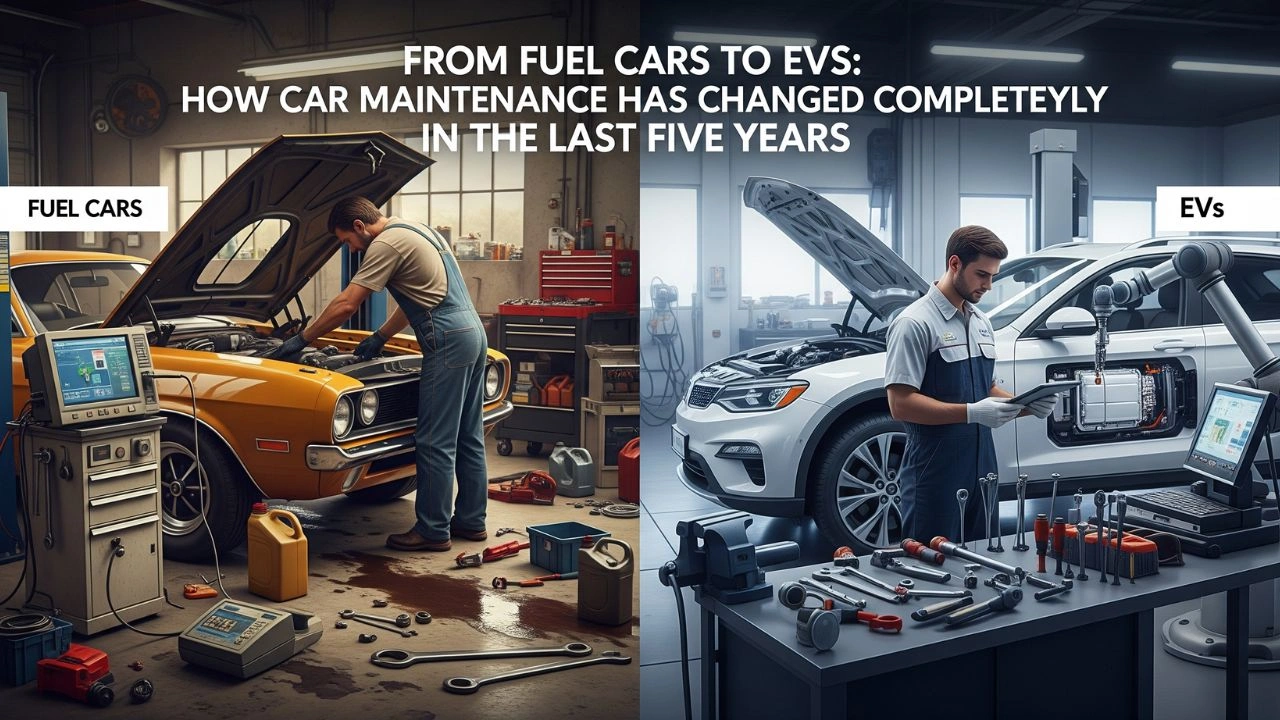
Over the last five years, the automotive world has undergone one of the most dramatic transformations in its history. What was once a landscape dominated by fuel-powered vehicles, mechanical repairs, and routine service schedules has rapidly evolved into a technology-driven ecosystem centered around electric vehicles (EVs), software updates, and predictive diagnostics. As a result, car maintenance has changed completely—both in practice and philosophy.
For vehicle owners, this shift has brought new opportunities, new responsibilities, and new challenges. Understanding how maintenance has evolved is no longer optional; it is essential for avoiding breakdowns, managing costs, and protecting long-term vehicle value. This article explores how car maintenance has changed, why it matters, and what every modern driver needs to know to adapt confidently.
The Traditional Era: Fuel Cars and Mechanical Maintenance
Just five years ago, car maintenance followed a familiar, largely mechanical routine. Internal combustion engine (ICE) vehicles relied on hundreds of moving parts working in constant friction and heat. Maintenance focused on preventing wear, managing fluids, and replacing components before failure.
Key maintenance tasks for fuel cars included:
- Regular oil and filter changes
- Spark plug and timing belt replacements
- Fuel system cleaning
- Exhaust and emissions system checks
- Transmission fluid servicing
Drivers were trained to listen for strange noises, watch for warning lights, and follow mileage-based service schedules. Maintenance was reactive and periodic, often triggered by visible symptoms or calendar reminders rather than real-time data.
While effective for its time, this approach left room for inefficiencies, surprise breakdowns, and higher long-term repair costs.
Read Also: EV Battery Degradation and Insurance Claims: What Happens When Range Drops Over Time
The Rise of Electrification: A Fundamental Shift
The rapid adoption of electric vehicles over the past five years has reshaped maintenance from the ground up. EVs eliminated many of the components that once defined car ownership, including:
- Engine oil systems
- Spark plugs
- Fuel injectors
- Exhaust systems
With far fewer moving parts, EVs introduced a new reality: less mechanical wear but greater dependence on electronics and software.
This shift forced both manufacturers and owners to rethink what “maintenance” really means. Instead of frequent part replacements, the focus moved toward system monitoring, battery health, and software optimization.
Fewer Moving Parts, Fewer Traditional Repairs
One of the most significant changes in car maintenance is the dramatic reduction in routine service needs. EVs typically require:
- No oil changes
- Minimal brake wear due to regenerative braking
- Fewer mechanical failures overall
This has reduced annual maintenance costs for many owners. However, fewer routine repairs does not mean no maintenance at all.
Maintenance has not disappeared—it has evolved. Instead of mechanical tasks, modern maintenance emphasizes monitoring, diagnostics, and preventive system care.
Battery Health Became the New Engine Health
In fuel cars, the engine was the heart of the vehicle. Today, the battery has taken that role. Over the past five years, battery health has become the single most important factor in vehicle performance, range, and resale value.
Modern maintenance now includes:
- Monitoring battery degradation
- Managing charging habits
- Maintaining thermal regulation systems
- Ensuring software optimizes energy efficiency
Unlike engines, batteries degrade gradually and invisibly. Without proper monitoring, owners may not notice problems until range drops significantly.
Battery care is now central to long-term reliability, replacing oil changes as the most critical maintenance concern.
Software Took Control of Vehicle Performance
Perhaps the most dramatic change in car maintenance is the role of software. Five years ago, software supported vehicles. Today, it defines them.
Modern cars rely on software to control:
- Power delivery
- Battery management
- Safety systems
- Climate control
- Driver-assistance features
Maintenance now includes:
- Regular software updates
- Bug fixes and performance patches
- Cybersecurity protections
Ignoring software updates can lead to performance issues, system conflicts, and even safety risks. In many cases, manufacturers tie warranties and performance guarantees to keeping systems up to date.
Software maintenance is now as essential as mechanical maintenance once was.
Predictive Maintenance Replaced Guesswork
Traditional maintenance schedules were based on averages: mileage, time, and assumptions about wear. Over the last five years, predictive maintenance has transformed this model.
Using sensors and data analytics, modern vehicles can:
- Predict component wear
- Detect inefficiencies early
- Alert drivers before failures occur
This shift allows maintenance to be data-driven rather than reactive. Instead of waiting for a problem, drivers are notified when action is needed.
Predictive maintenance reduces breakdowns, lowers repair costs, and improves overall vehicle reliability—but only if drivers respond to alerts promptly.
Hybrid Vehicles Bridged Two Maintenance Worlds
Hybrid vehicles played a critical role in the transition from fuel cars to EVs. Over the last five years, they introduced owners to dual-system maintenance, combining combustion engines with electric motors.
Hybrid maintenance includes:
- Engine servicing (though less frequent)
- Battery monitoring
- Powertrain coordination checks
- Specialized diagnostics
These vehicles demonstrated how maintenance complexity could increase even as routine tasks decreased. Hybrids taught owners that technology integration demands more awareness, not less.
Maintenance Costs: Lower Frequency, Higher Stakes
One of the most misunderstood changes in car maintenance is cost structure. While EVs generally cost less to maintain annually, individual repairs can be more expensive if neglected.
For example:
- Battery replacement is costly if degradation is ignored
- Software issues can disable multiple systems at once
- Specialized components require trained technicians
Maintenance is now about prevention rather than repair. Small issues, if addressed early, remain manageable. Ignored problems can escalate quickly.
The Changing Role of Mechanics and Service Centers
Over the past five years, the role of automotive technicians has evolved dramatically. Mechanics are no longer just mechanical experts—they are technologists and diagnosticians.
Modern service centers now rely on:
- Advanced diagnostic software
- Manufacturer-specific tools
- Continuous training and certification
This shift means that DIY maintenance has become more limited, while professional inspections have grown more important.
Choosing qualified service providers is now a critical maintenance decision.
Tires, Suspension, and ADAS: Maintenance Became System-Dependent
Advanced Driver-Assistance Systems (ADAS) have changed how traditional components are maintained. Cameras, radar, and sensors depend on precise alignment and calibration.
Over the last five years:
- Tire wear now affects safety systems
- Suspension alignment impacts automated braking and steering
- Minor impacts require recalibration
Maintenance now considers how each component affects the entire vehicle ecosystem. A simple tire replacement can require software recalibration to restore full functionality.
Driving Behavior Matters More Than Ever
Modern vehicles respond directly to how they are driven. Over the past five years, data has shown that driving habits significantly influence maintenance needs, especially for EVs.
Key factors include:
- Aggressive acceleration and braking
- Frequent fast charging
- Extreme temperature exposure
- Heavy loads and towing
Smart driving extends battery life, reduces component stress, and improves system efficiency. Technology supports good habits—but cannot replace them.
Environmental Awareness Became Part of Maintenance
Climate conditions now play a larger role in vehicle care. Batteries, sensors, and electronics are more sensitive to temperature extremes than traditional engines.
Modern maintenance adapts to:
- Hot climates stressing cooling systems
- Cold climates reducing battery efficiency
- Dust and humidity affecting sensors
Owners must adjust maintenance routines based on environment, not just mileage.
Resale Value Now Depends on Maintenance Data
Five years ago, resale value depended on mileage and visible condition. Today, maintenance data and battery health reports play a decisive role.
Buyers increasingly demand:
- Verified service records
- Software update history
- Battery performance data
Proper maintenance directly impacts long-term value, making documentation more important than ever.
What Vehicle Owners Must Unlearn—and Relearn
The evolution of car maintenance has required owners to unlearn outdated assumptions:
- “No oil changes means no maintenance”
- “Warning lights can wait”
- “Software updates are optional”
In their place, owners must relearn maintenance as:
- Continuous monitoring
- Proactive response
- Technology awareness
Modern maintenance rewards attention and consistency, not mechanical skill alone.
Read Also: Hyundai Inster: Expected Price, Features, EV Range, Design & Complete Buying Guide 2026
The Future Built on the Last Five Years
The last five years laid the foundation for the future of car maintenance. As EV adoption accelerates and vehicles become more autonomous, maintenance will continue to evolve toward:
- Fully predictive systems
- Remote diagnostics
- Over-the-air repairs
- Minimal mechanical intervention
Drivers who adapt now will benefit most from these advancements.
Conclusion: A Complete Transformation
From fuel cars to EVs, car maintenance has changed completely in just five years. What once revolved around mechanical wear now centers on data, software, and system health.
The core lesson is clear:
Maintenance did not disappear—it became smarter, more integrated, and more essential than ever.
Vehicle owners who understand this transformation enjoy safer, more reliable vehicles, lower long-term costs, and greater peace of mind in an increasingly digital automotive world.
Adapting to modern car maintenance is not about expertise—it is about awareness. And in today’s vehicles, awareness is the most powerful tool a driver can have.
2 thoughts on “From Fuel Cars to EVs: How Car Maintenance Has Changed Completely in the Last Five Years”