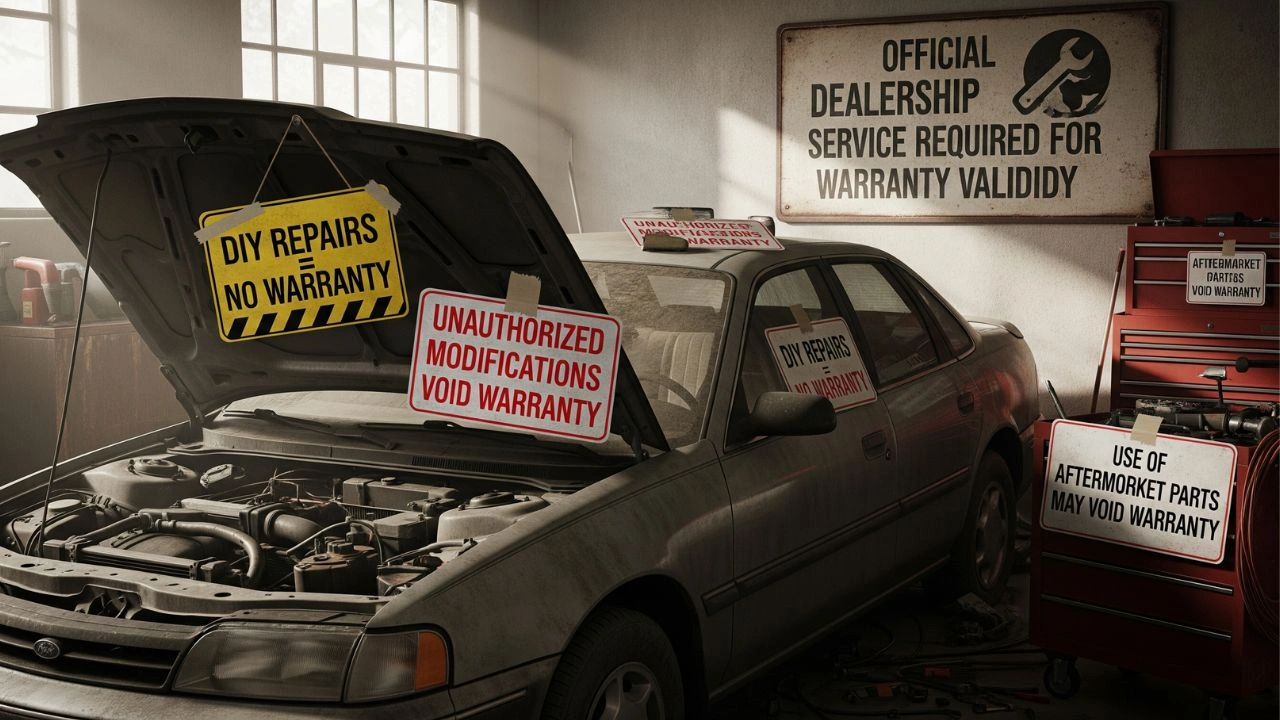
Most car owners assume their vehicle warranty will protect them no matter what goes wrong. Unfortunately, that assumption can be dangerously expensive. In reality, many warranties contain strict maintenance requirements, and failing to act on key warning signs can give manufacturers a valid reason to deny coverage—sometimes instantly.
Over the last few years, warranties have become more data-driven, more conditional, and less forgiving. Modern vehicles track service intervals, error codes, software updates, and even driving behavior. This means ignoring certain maintenance signs does not just risk a breakdown—it can invalidate your warranty entirely.
This in-depth guide explains the seven most critical car maintenance signs that drivers ignore far too often, why they matter legally and mechanically, and how to protect your warranty while avoiding costly repairs.
Why Warranties Are Easier to Void Than Most Drivers Think
A vehicle warranty is not a blanket promise to fix everything. It is a legal agreement that assumes the owner will:
- Follow manufacturer-recommended maintenance
- Address warning signs promptly
- Use approved parts and fluids
- Keep proper service records
When these conditions are not met, manufacturers can—and often do—deny claims. In modern vehicles, onboard systems store maintenance data, making it easier than ever for automakers to verify neglect.
Ignoring maintenance signs creates documented evidence of misuse or neglect, which can void warranty coverage even if the problem seems unrelated.
Read Also: VinFast Limo Green: A New Chapter in Sustainable, Premium Electric Mobility
Sign 1: Ignoring Dashboard Warning Lights
Dashboard warning lights are no longer simple reminders—they are documented alerts stored in the vehicle’s system.
Common examples include:
- Check engine light
- Battery warning
- Oil pressure alert
- Brake system warning
Ignoring these lights can signal negligence. If a component fails and the system shows the warning was active for an extended period, warranty claims may be denied.
Manufacturers expect immediate investigation of warning lights, even if the car appears to drive normally.
Sign 2: Skipping Scheduled Maintenance Intervals
Scheduled maintenance is the backbone of any warranty agreement. Missing oil changes, inspections, or system checks—even by a small margin—can be costly.
Modern vehicles log:
- Mileage between services
- Time elapsed since last inspection
- Maintenance reminders acknowledged or ignored
If a major component fails and records show skipped service intervals, the manufacturer may argue that lack of maintenance caused or contributed to the failure.
Skipping routine service is one of the most common—and most avoidable—reasons warranties are voided.
Sign 3: Using the Wrong Fluids or Parts
Not all oils, coolants, and replacement parts are created equal. Using unapproved fluids or components can:
- Cause premature wear
- Trigger error codes
- Void warranty coverage
Manufacturers specify exact standards for:
- Engine oil viscosity
- Transmission fluid
- Coolant composition
- Brake components
Even if a cheaper alternative seems compatible, using non-approved parts gives manufacturers legal grounds to deny coverage if damage occurs.
Sign 4: Delaying Software Updates and Recalls
In modern vehicles, software is a critical maintenance component. Ignoring updates or recall notices can instantly jeopardize warranty protection.
Software updates often:
- Fix known defects
- Improve system reliability
- Prevent component damage
If a failure occurs that an update was designed to prevent, and records show the update was ignored, warranty claims may be denied.
Failing to address recalls is especially risky, as manufacturers clearly document owner notifications.
Sign 5: Driving With Overheating or Cooling System Warnings
Overheating is one of the fastest ways to cause catastrophic engine or battery damage. Warning signs include:
- Temperature gauge spikes
- Coolant warning lights
- Reduced performance modes
Continuing to drive under these conditions can be considered abuse or neglect. Many warranties explicitly exclude coverage for damage caused by overheating after a warning.
Stopping immediately and seeking service is essential to protect both the vehicle and your warranty.
Sign 6: Ignoring Unusual Noises, Vibrations, or Smells
While not always tied to a dashboard alert, unusual sensory warnings still matter. Grinding noises, burning smells, or severe vibrations often indicate developing issues.
If these symptoms are ignored and lead to major failure, manufacturers may argue that a reasonable owner would have sought service sooner.
In warranty disputes, common-sense neglect can be just as damaging as ignoring warning lights.
Sign 7: Modifications That Affect Factory Systems
Aftermarket modifications are one of the fastest ways to risk warranty denial. Common examples include:
- Performance tuning
- Suspension changes
- Electrical modifications
- Non-approved accessories
Even minor changes can affect factory systems. If a modified component contributes to failure, the warranty claim may be denied—not just for that part, but for related systems.
Manufacturers increasingly use diagnostics to detect software changes and unauthorized modifications.
How Modern Vehicles Prove Maintenance Neglect
One of the biggest changes in recent years is how vehicles document owner behavior. Modern systems record:
- Warning light history
- Service interval compliance
- Software update status
- Error codes over time
This data can be accessed during warranty evaluations. Verbal explanations are no longer enough.
If the data shows neglect, the warranty claim is often denied—regardless of circumstances.
The Legal Reality of Warranty Denials
Consumer protection laws prevent manufacturers from voiding warranties without cause, but they do not protect against neglect.
Manufacturers must prove:
- Maintenance requirements were not followed
- Neglect contributed to the failure
Unfortunately for owners, maintenance data often makes that proof easy.
Keeping detailed records and acting promptly on warning signs is your best legal defense.
How to Protect Your Warranty Proactively
To avoid warranty issues, follow these best practices:
- Address warning lights immediately
- Follow maintenance schedules precisely
- Keep all service records
- Use approved parts and fluids
- Complete software updates promptly
- Respond to recalls without delay
Documentation is as important as maintenance itself.
Why EV and Hybrid Owners Must Be Extra Careful
Electric and hybrid vehicles add new warranty risks:
- Battery health monitoring
- Charging behavior tracking
- Software dependency
Ignoring charging warnings or battery alerts can void EV-specific warranties, which are often separate from the general vehicle warranty.
EV warranties are generous—but conditional.
Read Also: Joy e-bike Beast: A Deep Dive Into India’s Premium Electric Motorcycle
Cost of Ignoring These Signs: More Than Repairs
When a warranty is voided, owners face:
- Full repair costs
- Reduced resale value
- Loss of manufacturer goodwill
- Higher insurance premiums
The financial impact often far exceeds the cost of preventive maintenance.
Conclusion: Attention Is Your Best Protection
Ignoring these seven car maintenance signs is not just risky—it can instantly and legally void your warranty. In today’s vehicles, maintenance is monitored, documented, and enforceable.
The good news is that protecting your warranty is simple:
Pay attention, act promptly, and keep records.
A few minutes of attention today can save thousands of dollars tomorrow—and keep your warranty intact when you need it most.