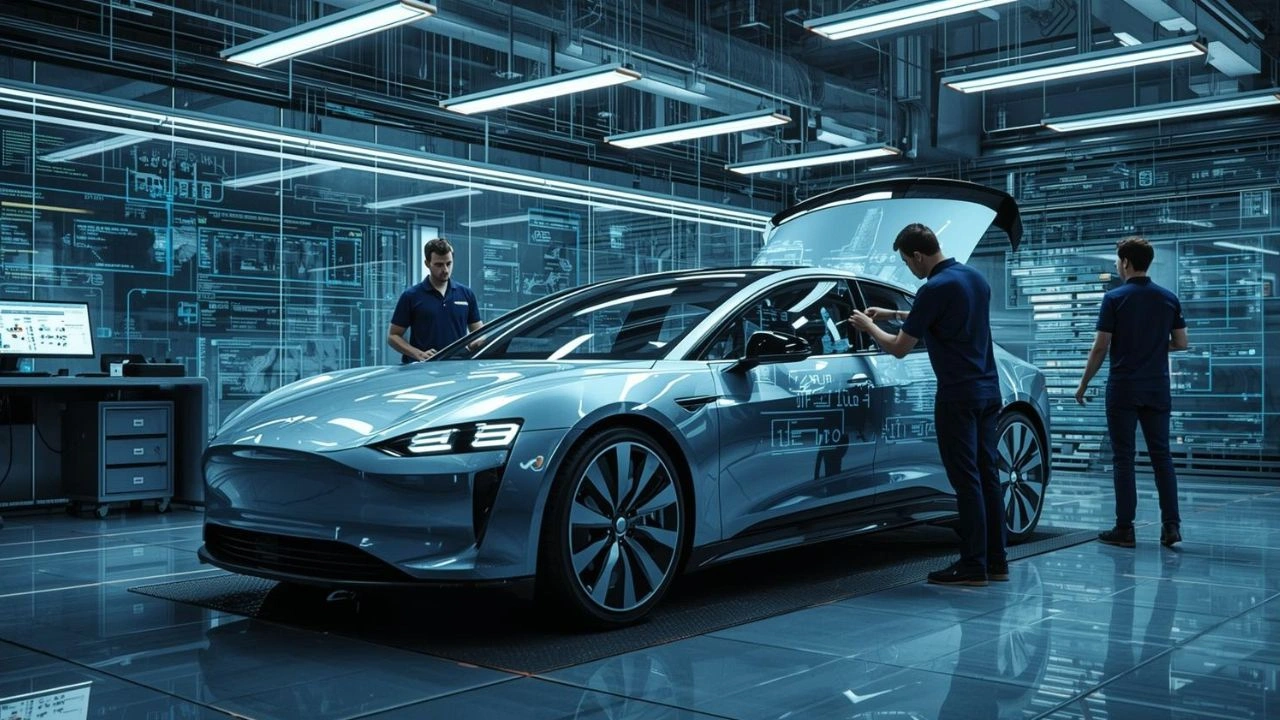
Software Maintenance for Electric Vehicles: Electric vehicles (EVs) are often marketed as low-maintenance alternatives to petrol and diesel cars. No oil changes, fewer moving parts, quieter operation—on the surface, EV ownership appears simpler and cheaper. However, beneath the hood lies a complex digital ecosystem powered by software. From battery management and motor control to infotainment, driver assistance, and over-the-air (OTA) updates, software has become the backbone of modern electric vehicles.
As EV adoption accelerates globally, a new question is emerging among buyers and long-term owners: What does software maintenance really cost over time? Paid updates, recurring subscriptions, software bugs, cybersecurity risks, and support limitations are now part of the EV ownership equation.
This article explores the realities of EV software maintenance, the rise of paid features and updates, common software bugs, and how these factors influence long-term ownership costs—especially for buyers planning to keep their vehicles for 8–15 years.
1. Why Software Is Central to Electric Vehicles
Unlike traditional internal combustion engine (ICE) vehicles, EVs rely heavily on software for core functionality. Software is not just an add-on; it controls essential systems such as:
- Battery Management System (BMS)
- Motor control and power delivery
- Regenerative braking
- Thermal management (battery and cabin)
- Charging speed and efficiency
- Range estimation
- Driver assistance and safety features
- Infotainment and connectivity
In many modern EVs, even basic functions like acceleration response, braking feel, and energy efficiency are influenced by code rather than mechanical components.
This software-defined architecture allows manufacturers to improve vehicles after purchase—but it also introduces new responsibilities and potential costs for owners.
Read Also: MG Comet EV: Redefining Urban Electric Mobility in India
2. Over-the-Air (OTA) Updates: Promise vs Reality
What Are OTA Updates?
Over-the-air updates allow manufacturers to remotely update vehicle software using cellular or Wi-Fi connections. OTA updates can:
- Fix bugs
- Improve efficiency or range
- Add new features
- Enhance safety systems
- Update navigation and infotainment
In theory, OTA updates make EVs better over time, similar to smartphones.
The Reality of OTA Updates
While OTA updates offer convenience, they also introduce concerns:
- Unpredictable changes
An update may alter vehicle behavior unexpectedly—such as throttle response, braking feel, or range calculation. - Forced updates
Some manufacturers push mandatory updates that owners cannot refuse, even if the vehicle is functioning properly. - Update failures
In rare cases, failed updates can disable certain vehicle functions, requiring service center intervention. - Dependency on manufacturer support
If a company discontinues software support, OTA updates may stop entirely.
OTA updates are powerful—but they shift control from the owner to the manufacturer.
3. Paid Software Features and Subscriptions: The New Business Model
One of the most controversial trends in the EV industry is the move toward paid software features and recurring subscriptions.
Common Paid Software Features
Many EV manufacturers now lock certain features behind software paywalls, including:
- Advanced driver assistance (ADAS)
- Adaptive cruise control
- Enhanced autopilot or self-driving modes
- Performance boosts (acceleration upgrades)
- Heated seats or steering (already installed hardware)
- Premium infotainment features
- Remote vehicle access via mobile apps
In some cases, the hardware is already present in the vehicle, but functionality is disabled unless the owner pays.
One-Time Purchase vs Subscription
Manufacturers use two main pricing models:
- One-time unlock fee (₹50,000–₹3,00,000 depending on feature)
- Monthly or annual subscription (₹500–₹5,000 per month)
Over long ownership periods, subscription costs can exceed the price of traditional vehicle maintenance.
Long-Term Cost Example
If an owner pays ₹2,000 per month for premium software features:
- 5 years = ₹1,20,000
- 10 years = ₹2,40,000
- 15 years = ₹3,60,000
These costs are often not included in advertised vehicle prices, making EVs appear cheaper upfront than they truly are over time.
4. Software Bugs: A Growing Pain Point
Software bugs are an unavoidable reality in complex digital systems, and EVs are no exception.
Common EV Software Bugs
Owners frequently report issues such as:
- Incorrect range estimates
- Charging failures or slow charging
- Infotainment system freezes or reboots
- App connectivity problems
- False warning messages
- Driver assistance system malfunctions
- Sudden loss of features after updates
Unlike mechanical issues, software bugs can be intermittent and difficult to diagnose.
Safety Implications
Some software bugs can impact safety, including:
- Malfunctioning ADAS features
- Incorrect braking behavior
- Sudden power limitation
- Sensor calibration errors
Although most manufacturers respond with updates, resolution timelines vary widely.
5. Software Recalls vs Traditional Recalls
Traditional recalls require physical repairs or part replacements. In EVs, many recalls are now software-based.
Advantages of Software Recalls
- Faster deployment
- No service center visit required
- Lower cost for manufacturers
- Reduced inconvenience for owners
Hidden Risks
- Owners may be unaware of critical updates
- Software recalls depend on active connectivity
- Vehicles in areas with poor network coverage may miss updates
- Used EV buyers may not receive update notifications
While software recalls improve efficiency, they also place responsibility on owners to remain digitally connected.
6. Cybersecurity and Data Privacy Costs
As connected devices on wheels, EVs collect vast amounts of data, including:
- Location history
- Driving behavior
- Charging patterns
- Biometric data (in some models)
- Voice commands and contacts
Cybersecurity Risks
Software vulnerabilities can expose EVs to:
- Unauthorized access
- Data theft
- Remote manipulation (rare but possible)
- Tracking without consent
Manufacturers must invest heavily in cybersecurity updates, and those costs are often passed on to consumers indirectly through subscriptions or higher service charges.
7. Software Support Lifespan: What Happens After 8–10 Years?
One of the most overlooked aspects of EV ownership is software support duration.
Typical Software Support Period
Most manufacturers do not publicly guarantee software support beyond:
- 8–10 years from production start
- 5–7 years for infotainment systems
- Shorter periods for mobile apps
Once support ends:
- OTA updates may stop
- App functionality may be discontinued
- Navigation maps may become outdated
- Cloud-based features may stop working
Impact on Long-Term Owners
For owners planning to keep their EV for 12–15 years, this can result in:
- Reduced functionality
- Lower resale value
- Compatibility issues with new charging networks
- Increased reliance on third-party solutions
This is a major shift from traditional cars, which can operate independently without software support.
8. Service Centers and Software Diagnostics Costs
Although EVs have fewer mechanical parts, software diagnostics require specialized tools and trained technicians.
Software-Related Service Costs
Service centers may charge for:
- Diagnostic scans
- Firmware reinstallation
- Sensor recalibration
- Module replacement due to software corruption
In some regions, independent garages cannot access proprietary software tools, forcing owners to rely on authorized service centers—often at higher costs.
9. Used EV Market and Software Transfer Issues
Software maintenance also affects resale value and second-hand buyers.
Common Used EV Software Issues
- Paid features not transferable to new owners
- Subscriptions tied to original buyer accounts
- Inactive app connectivity
- Outdated software versions
- Limited access to OTA updates
Some manufacturers require new owners to repurchase software features, increasing the effective cost of used EVs.
10. Comparison with ICE Vehicles
| Aspect | ICE Vehicles | Electric Vehicles |
| Mechanical maintenance | High | Low |
| Software dependency | Low | Very high |
| OTA updates | Rare | Common |
| Subscriptions | Minimal | Increasing |
| Long-term support risk | Low | Moderate to high |
| DIY repair potential | Higher | Lower |
While EVs reduce mechanical costs, software introduces new financial and ownership complexities.
11. How Owners Can Reduce Software-Related Costs
EV owners can take proactive steps to minimize long-term software expenses:
- Choose manufacturers with transparent policies
Look for clear information on software support duration and pricing. - Avoid unnecessary subscriptions
Evaluate whether paid features truly add value. - Keep software updated regularly
Delaying updates can cause compatibility issues later. - Document feature ownership
Maintain records of purchased software features for resale. - Check used EV software status before buying
Verify active subscriptions and feature availability.
Read Also: Ultraviolette F77: India’s High-Performance Electric Motorcycle That Redefined Electric Riding
12. The Future of EV Software Maintenance
The EV industry is still evolving, and software models will likely change.
Possible Future Trends
- Lifetime software bundles included at purchase
- Standardized minimum support periods (10–15 years)
- Open-source vehicle software platforms
- Reduced subscription dependence
- Stronger consumer protection laws
Governments and regulators are increasingly scrutinizing software-locked features, which may lead to fairer ownership rights.
Conclusion: Is EV Software Maintenance a Hidden Cost?
Electric vehicles undeniably represent the future of mobility, offering cleaner energy use, lower mechanical maintenance, and advanced technology. However, software maintenance is becoming a significant—and often underestimated—component of EV ownership.
Paid updates, subscriptions, software bugs, cybersecurity concerns, and limited support lifespans can increase long-term costs, especially for owners who plan to keep their vehicles for many years.
For buyers, the key is awareness. Understanding software policies is now just as important as evaluating battery range or charging speed. EVs may be low-maintenance mechanically—but in the digital age, ownership extends far beyond hardware.
As the industry matures, transparent software practices will determine which manufacturers truly deliver long-term value to EV owners.
1 thought on “Software Maintenance for Electric Vehicles: Paid Updates, Bugs, and Long-Term Ownership Costs”