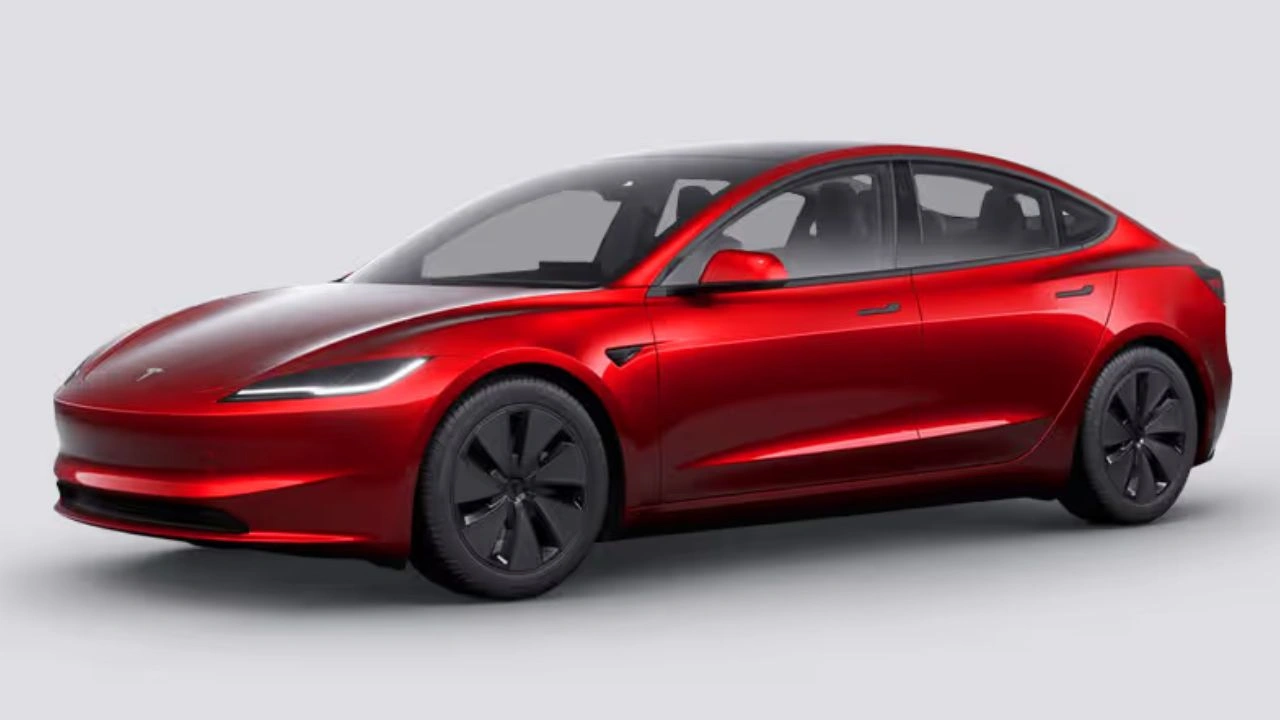
Tesla Model 3 EV evolves again in 2026, blending cutting-edge software, long range, and premium performance into one electric icon.
The electric vehicle revolution has many milestones, but few cars can claim to have changed the industry as profoundly as the Tesla Model 3. Since its debut, the Model 3 has been more than just a car—it has been a statement about the future of mobility. As Tesla prepares for the expected January 15, 2026 launch of the updated Tesla Model 3, with an estimated price of Rs 60 lakh, anticipation is once again running high across global markets.
The 2026 Tesla Model 3 is expected to build upon an already legendary platform, refining what made it successful while introducing smarter software, improved efficiency, enhanced comfort, and next-generation autonomy features. This article offers a deep, comprehensive look at the upcoming Tesla Model 3—covering its design, performance, range, technology, safety, pricing, and its broader impact on the electric vehicle ecosystem.
Tesla’s Vision and the Model 3’s Global Significance
Tesla has never positioned itself as just another carmaker. From the beginning, Tesla’s mission has been to accelerate the world’s transition to sustainable energy, and the Model 3 has been its most powerful tool in achieving that goal.
The Model 3 was Tesla’s first true mass-market electric vehicle, proving that EVs could be desirable, fast, safe, and practical all at once. By 2026, the Model 3 is no longer a newcomer—it is a global benchmark. The upcoming version is expected to further solidify Tesla’s dominance by refining efficiency, autonomy, and digital intelligence.
Exterior Design: Minimalism with Purpose
The Tesla Model 3 has always favored clean, aerodynamic design over aggressive styling, and the 2026 version is expected to continue this philosophy with subtle yet meaningful enhancements.
Expected exterior updates include:
- Refined front fascia for improved aerodynamics
- Sleeker LED headlamps and tail lamps
- Updated wheel designs to reduce drag
- Flush door handles for seamless airflow
- Improved paint quality and finish options
Rather than dramatic visual changes, Tesla focuses on functional design evolution, ensuring that every curve serves a purpose. The result is a sedan that looks modern today and will still look contemporary years into the future.
Read Also: Mahindra BE 07 EV: India’s Futuristic Electric SUV Ready to Redefine Premium EV Performance in 2026
Interior Experience: Simplicity Meets Intelligence
Inside, the Tesla Model 3 has always stood apart. The interior is defined by its radical minimalism, centered around a single large touchscreen that controls almost every function.
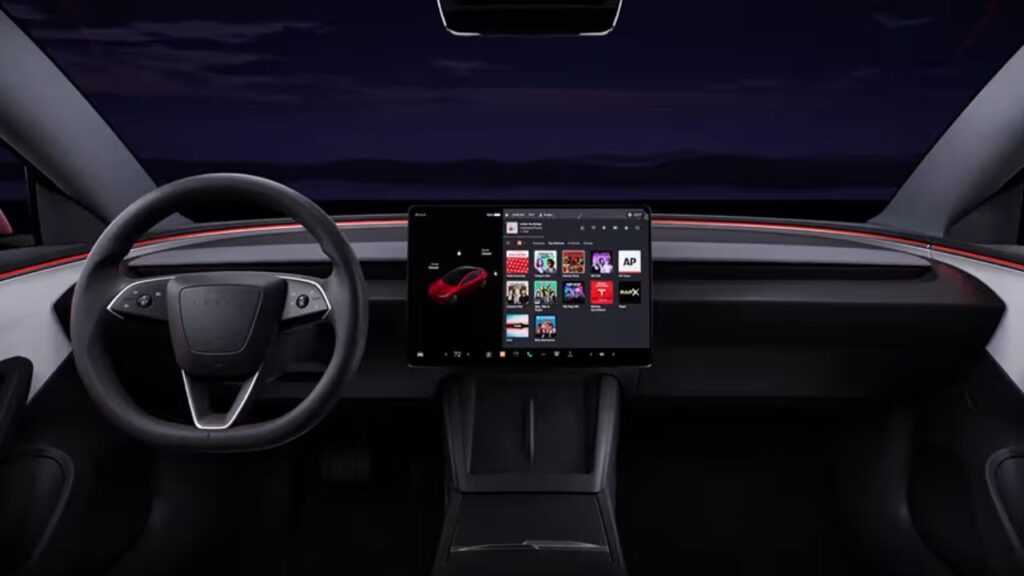
For 2026, the cabin is expected to feel even more refined, with improvements in materials, sound insulation, and ergonomics.
Anticipated interior highlights include:
- Large central touchscreen with faster processing
- Improved UI with enhanced customization
- Premium upholstery with sustainable materials
- Ambient lighting for a more upscale feel
- Increased storage solutions and refined seat comfort
Tesla’s design philosophy removes clutter, allowing drivers to focus on the road while the software handles complexity in the background.
Performance: Instant Torque, Effortless Speed
Performance has always been a defining strength of the Tesla Model 3. Even base variants deliver acceleration that rivals traditional sports sedans.
Expected performance characteristics for the 2026 Model 3 include:
- Single-motor and dual-motor configurations
- All-wheel-drive options for enhanced traction
- Rapid 0–100 km/h acceleration
- Smooth, linear power delivery
What sets the Model 3 apart is not just raw speed, but how effortless and silent that speed feels. Electric torque is instant, making city driving responsive and highway overtakes seamless.
Electric Range and Efficiency Leadership
Range anxiety is one of the biggest barriers to EV adoption, and Tesla has consistently led the industry in addressing it. The 2026 Tesla Model 3 is expected to push efficiency even further.
Projected range highlights include:
- 500–600 km (WLTP) depending on variant
- Improved battery chemistry and energy density
- Enhanced regenerative braking
- Optimized thermal management system
Tesla’s focus on efficiency means that real-world range often closely matches official figures, giving owners confidence in everyday usage.
Charging Ecosystem: Still the Gold Standard
Charging convenience remains one of Tesla’s strongest competitive advantages. The Model 3 benefits from Tesla’s global Supercharger network, which continues to expand rapidly.
Charging-related features include:
- Ultra-fast DC charging capability
- Seamless navigation-based charger routing
- Short charging stops with high-speed top-ups
- Home charging compatibility
Tesla’s charging ecosystem reduces friction for EV ownership, making long-distance electric travel not just possible, but genuinely convenient.
Software and Infotainment: A Car That Gets Better Over Time
Tesla vehicles are often described as computers on wheels, and the Model 3 exemplifies this concept. The 2026 version is expected to feature even more advanced software capabilities.
Key software features include:
- Over-the-air (OTA) updates
- Advanced voice commands
- Cloud-based navigation and data services
- Continuous feature improvements post-purchase
Unlike traditional cars, the Tesla Model 3 improves with age, gaining new features and optimizations through software updates rather than becoming outdated.
Autopilot and Full Self-Driving Potential
Tesla’s driver assistance systems remain among the most talked-about features in the automotive world. While full autonomy is still evolving, the 2026 Model 3 is expected to take another step forward.
Expected driver assistance capabilities include:
- Enhanced Autopilot for highway driving
- Lane centering and adaptive cruise control
- Traffic-aware navigation
- Advanced camera-based perception system
These systems aim to reduce driver fatigue, improve safety, and prepare the vehicle for increasingly autonomous operation in the future.
Safety: Built from the Ground Up for Protection
Safety has always been a core strength of the Tesla Model 3. Its electric architecture allows for large crumple zones and a low center of gravity, enhancing crash protection.
Anticipated safety features include:
- Rigid aluminum-intensive body structure
- Multiple airbags
- Advanced collision avoidance systems
- Real-time monitoring through onboard sensors
Tesla vehicles have consistently achieved top safety ratings globally, and the 2026 Model 3 is expected to continue this legacy.
Pricing Strategy: Premium, Yet Performance-Focused
With an estimated price of Rs 60 lakh, the Tesla Model 3 is positioned as a premium electric sedan. While not inexpensive, its pricing reflects the combination of technology, performance, and long-term value.
What buyers get for the price:
- High performance with zero fuel costs
- Advanced software and connectivity
- Strong resale value
- Low maintenance compared to ICE vehicles
When total cost of ownership is considered, the Model 3 often proves competitive with traditional luxury sedans.
Target Audience: Who Is the Tesla Model 3 For?
The Tesla Model 3 appeals to a wide range of buyers, including:
- Professionals seeking a premium yet efficient sedan
- Tech enthusiasts who value innovation
- Environmentally conscious drivers
- Buyers upgrading from luxury ICE vehicles
Its versatility allows it to function as both a daily commuter and a long-distance cruiser.
Competition and Market Position
By 2026, the electric sedan segment will be more competitive than ever. The Tesla Model 3 will face challengers from established luxury brands and emerging EV manufacturers.
However, the Model 3 maintains a strong edge due to:
- Mature EV technology
- Industry-leading software
- Superior charging ecosystem
- Strong global brand recognition
These factors continue to make it a benchmark in its segment.
Environmental Impact and Sustainability
Beyond performance and technology, the Tesla Model 3 plays a significant role in reducing environmental impact.
Sustainability benefits include:
- Zero tailpipe emissions
- Reduced lifetime carbon footprint
- Energy-efficient manufacturing processes
- Support for renewable energy integration
For many buyers, the Model 3 represents not just a car, but a commitment to a cleaner future.
Read Also: Leapmotor T03 EV: The Affordable Electric City Car Set to Transform Urban Mobility in 2026
Market Expectations for the 2026 Launch
As the January 15, 2026 expected launch date approaches, industry analysts anticipate strong demand for the updated Tesla Model 3. Incremental improvements, rather than radical redesigns, are expected to keep the model competitive while preserving its identity.
Tesla’s ability to refine software, efficiency, and user experience without overcomplicating the product is one of its greatest strengths.
Conclusion: Still the Benchmark Electric Sedan
The Tesla Model 3 has already earned its place in automotive history, but the 2026 iteration proves that Tesla is not content to stand still. By refining efficiency, enhancing software intelligence, and maintaining strong performance credentials, the Model 3 continues to set the standard for electric sedans worldwide.
For buyers seeking a premium electric vehicle that blends performance, technology, safety, and sustainability, the Tesla Model 3 remains one of the most compelling choices on the market. As the EV world evolves, the Model 3’s influence shows no sign of fading—it simply keeps getting better.
3 thoughts on “Tesla Model 3 EV 2026: The Electric Sedan That Continues to Redefine Global EV Standards”